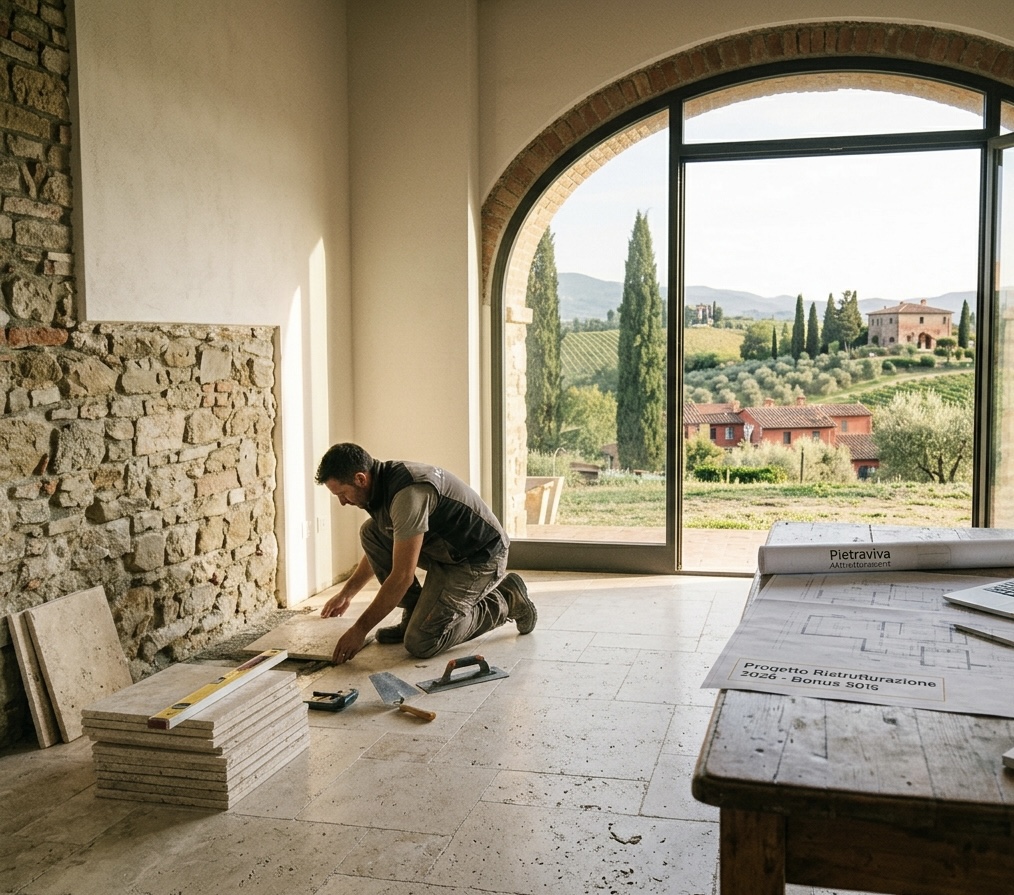
2026 is one of the good years to renovate. The renovation bonus stays at 50% on your main home, material costs have stabilised after the difficult years, and the rules are clear. There is, however, one date to circle in red on the calendar: 31 December 2026. From then on the maths changes — and it changes quite a bit.
If you're thinking of doing up an apartment in the Piana di Lucca or a villa in Versilia, this guide gives you the real numbers — deductions, cost per square metre, timelines — and explains why starting now isn't just a matter of taste, but of figures that add up.
The 2026 renovation bonus: the numbers to know
The 2026 Budget Law confirmed the incentives at the same rates as the previous year. In short:
- 50% deduction for works on your main home (the property where you have your residence and habitually live), with a spending cap of up to €96,000 per property unit.
- 36% deduction for second homes and other residential properties, again within €96,000.
- The recovery is via personal income tax (IRPEF), spread over ten equal annual instalments in your tax return.
One clarification worth its weight in gold, because it often causes confusion: the 50% isn't tied to the "first house" in the sense of the first property you buy, but to your main residence. If the property isn't yet your residence when the works begin, the higher rate still applies provided it becomes so by the end of the site. It's a technical detail that makes the difference between an incentive obtained and one lost — and it's exactly the kind of check to do before signing anything.
Alongside the renovation bonus, the ecobonus (energy upgrade), sismabonus (seismic safety) and the furniture bonus linked to recovery works are all confirmed. Each measure has its own ceilings and requirements: they aren't interchangeable, and on a single site it often pays to combine them the right way.
Why 2027 changes the game
Here's the hook that makes this moment different from any other year. The current rates apply until 31 December 2026. Barring further extensions, from 1 January 2027 the percentages will drop:
- from 50% to 36% on your main home;
- from 36% to 30% on second homes.
In money terms: on a €96,000 job on your main home, the difference between starting in 2026 and in 2027 is about €13,000 less in deductions. Not a trifle.
But watch out for a practical point many underestimate: what counts is the date the expense is incurred (the traceable payment), not when you make the decision. A proper site requires a survey, design, building permits and checks before the first bank transfer is even made. Anyone wanting to "close out" expenses within 2026 should move well in advance, not in December.
How much it costs to renovate in 2026
It's everyone's first question, and the honest answer is: it depends. But some market benchmarks help you get your bearings. Indicative figures for 2026, including labour and materials, are:
- Light renovation (repainting, floors, replacing sanitary ware): roughly €300–600/m².
- Complete "turnkey" renovation (full overhaul of the whole property: systems, bathrooms, finishes): roughly €800–1,000/m².
- High-end renovation (top-tier materials, home automation, bespoke details): over €1,000/m², with higher peaks on historic residences.
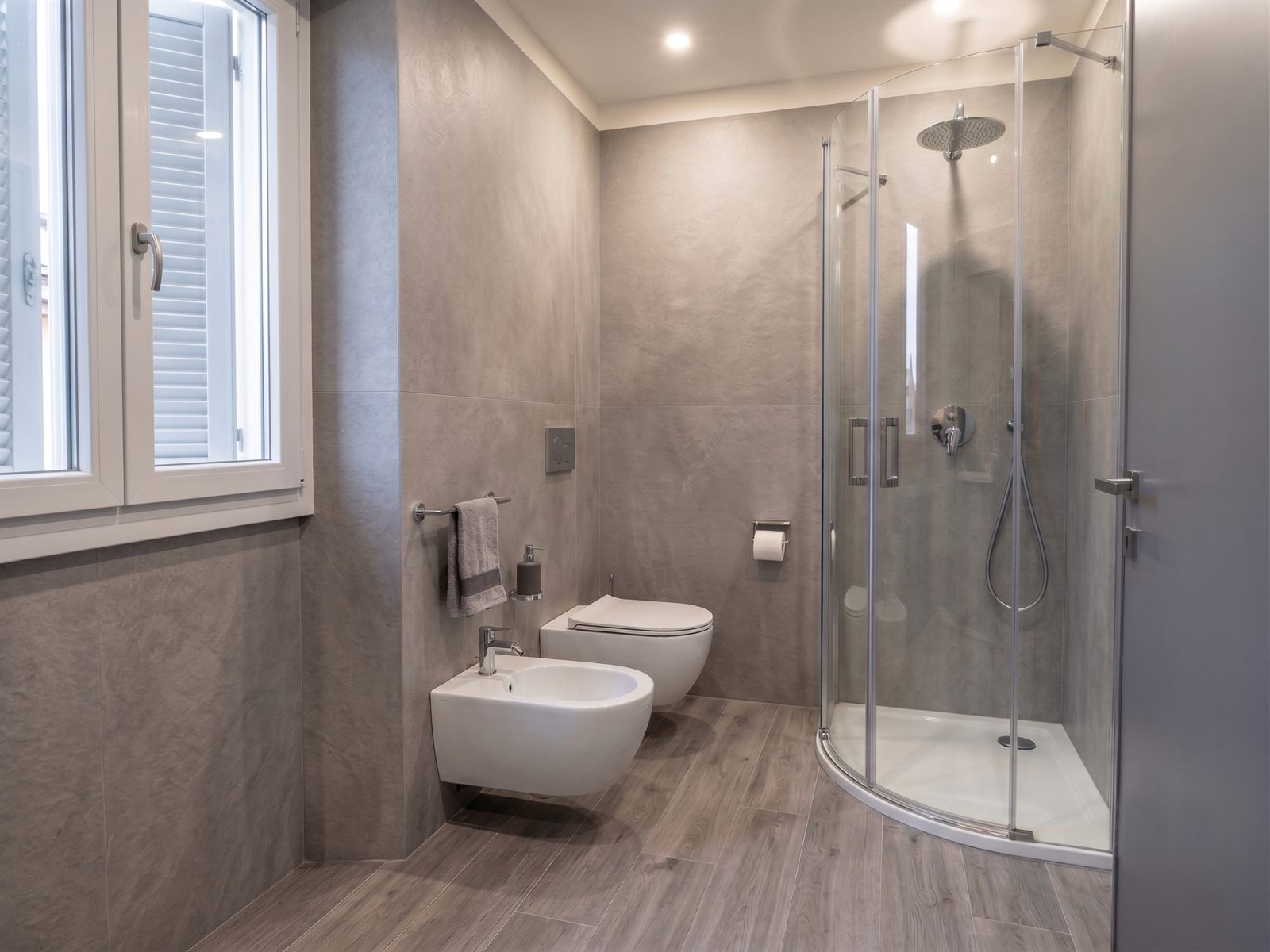
For a standard 80–100 m² apartment, a complete job typically lands between €60,000 and €100,000. Labour accounts on average for 40% to 50% of the total, and the items that absorb the most budget are almost always two: systems and bathrooms, where plumbing, waterproofing and tiling require delicate work over just a few square metres.
One tip that saves you more than any discount: be wary of "lump-sum" quotes like "bathroom refit €6,000". Always ask for a detailed cost breakdown, item by item, with quantities and unit prices. Not only does it let you compare different offers properly: it's the only way to understand where you're spending and to avoid mid-site surprises, when the works are already open and the bargaining power is all on the other side.
Renovating without nasty surprises: what to check first
Plenty of people can do the "pretty" works. What separates a successful renovation from a nightmare is the before and the after of the site. Three checks no one should skip:
- 1. Cadastral and planning compliance. Before touching a wall, the property must be "in order on paper": the cadastral floor plan must match the actual state and the building titles must be in order. Even small discrepancies — a moved window, a partition never declared — can halt the works, void the bonuses or cause serious problems when selling. These situations can almost always be resolved, but it has to be done first, not with the site already open.
- 2. Traceability of payments. Deductions are lost if payments don't follow the rules (the so-called "speaking bank transfer", with the correct reason and references). A formal error can cost the entire bonus.
- 3. Who answers for the result. A single point of contact from start to finish — coordinating design, contractors, permits and finishes — is worth more than ten disconnected suppliers. Knowing who to turn to when something doesn't add up, and having written guarantees on the delivered work, is what turns an expense into an investment.
Renovating in Lucca and Versilia: two worlds, one method
In the Piana di Lucca, renovation is often tied to the main home: the focus is on everyday comfort, energy savings and resale value. Here, certain timelines, controlled costs and no surprises along the way are what matter.
In Versilia, among second homes and prestigious residences, the logic is different: the bonus matters less, while design, discretion and attention to detail carry the weight. On a villa or a historic property you need extra skills — conservative restoration, managing constraints, structural calculation — and someone able to answer for every choice.
In both cases the method that works is the same: a single technical point of contact, from design to the keys, who stands behind every stage instead of merely selling the works.
Frequently asked questions
From a tax point of view, 2026 is more advantageous: the 50% on your main home drops to 36% from 2027. Anyone planning major works has a concrete reason to bring them forward, remembering that what counts is the date the expense is actually paid.
No. The 50% applies to your main residence; on second homes the rate is 36%. In both cases the spending cap is €96,000 per property unit.
Yes, and it's more common than you'd think: payments not correctly traceable, cadastral discrepancies not resolved or missing building titles can compromise the deduction. That's why the technical side must be sorted out before you start.
It depends on the scope of works, but for an average apartment you're looking at a few months. The design and permits phase, which comes before the site, has to be factored in: that's exactly the part that, if skipped, causes the delays.
Have a question about this article?
Message us on WhatsApp: a surveyor replies directly, no obligation. Or fill in the form.
Thinking of renovating in Lucca or Versilia?
With Pietraviva you have a single technical point of contact from design to handover: fixed price, deadlines met and a professional who stands behind every stage. Not the firm that sells you the works — the professional who guarantees them.
The tax and cost figures shown are current as of July 2026 and are indicative only. Every project should be assessed case by case with a dedicated technical review.