“I'll do it myself: I'll call the plumber, the electrician and the builder, and save money.” It's the most common reasoning among people starting a renovation, and sometimes it's the right one. Other times it's the quickest way to spend more and finish later.
In this guide we compare the two ways of organising a building site — turnkey and self-managed — without claiming one is always better. We look at what changes in terms of costs, timelines, responsibilities and warranties, and how to work out which route makes sense for your project. An honest disclaimer: we do turnkey, so we have a stake. That's why you'll also find the cases where we wouldn't recommend it.
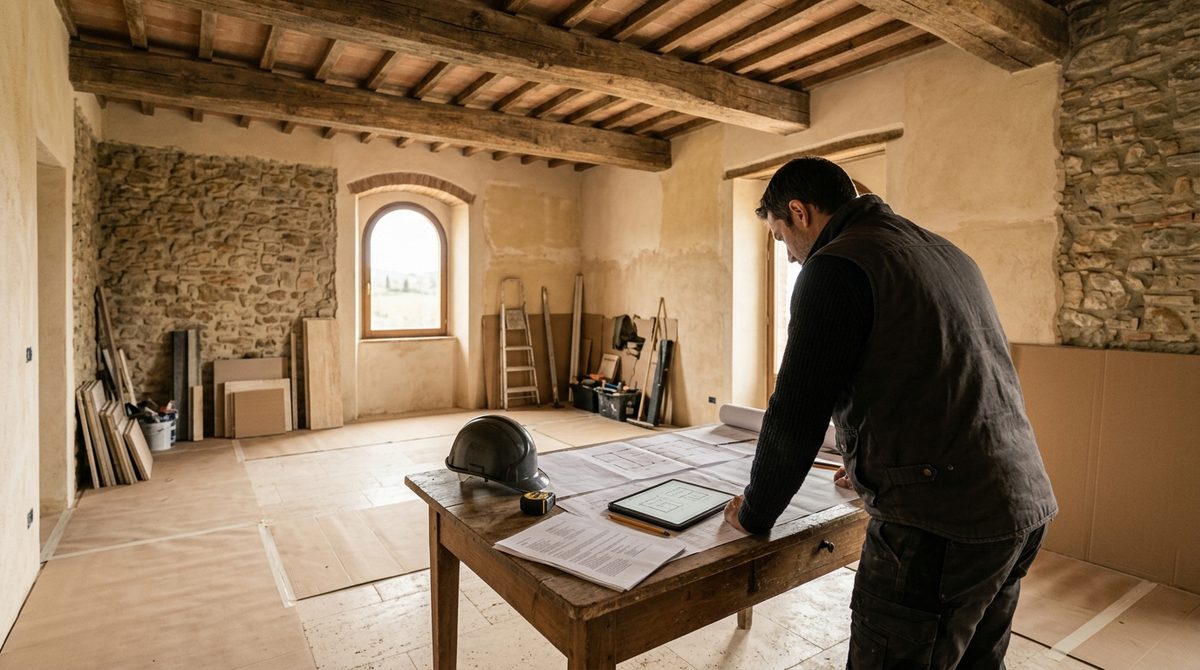
What the two approaches really mean
- Turnkey. A single party — a contractor or a company — takes on the whole job: quote, coordination of the trades, purchase of materials, technical paperwork, handover. You have one contract and one point of contact.
- Self-managed. You (or a professional you appoint) choose and hire each tradesperson — builder, plumber, electrician, tiler, painter — with separate quotes, contracts and payments. You coordinate timing and sequence.
- The middle way. You appoint a professional to supervise the works and hire separate contractors. You get more control over each step, but multiple contracts and payments remain to be handled.
Careful with the term: “turnkey” is not a legal formula and guarantees nothing in itself. What matters is what's written in the quote and the contract, not the label.
The comparison, item by item
| Aspect | Self-managed | Turnkey |
|---|---|---|
| Initial cost | Often lower on paper: you pay each trade separately, without the coordination margin | Includes coordination, organisation and the contractor's margin |
| Final cost | Less predictable: extras, idle time and rework are on you | More predictable, if the bill of quantities is detailed |
| Timing | Depends on everyone's availability; the gaps between tradespeople are yours | Sequence planned by a single director |
| Responsibility | Fragmented: if one job damages another's, it's yours to sort out | One party answerable to you |
| Your time | High: site visits, calls, supplies, checks | Low: key decisions and checks |
| Control over choices | Maximum, on every detail | High, but within an agreed perimeter |
| Safety and obligations | On you as the client (see below) | Simpler: a single party to check |
The point many miss: when self-managing you don't save the contractor's margin, you swap it for other costs — your time, the risk of coordination errors, the days the site stands idle. Sometimes the swap pays off, sometimes it doesn't.
When self-managing makes sense
There are jobs where doing it yourself is the most sensible choice:
- A single trade. Replacing fixtures, painting, redoing a floor without masonry work: one tradesperson, one quote, no coordination.
- Small, independent jobs. Work that doesn't touch the services or the structure and doesn't depend on anyone else's work.
- You have time and expertise. If you follow the site every day and can read a quote and a bill of quantities, direct control can deliver excellent results.
- You already have tradespeople you trust. An established relationship is worth more than any contractual formula.
When turnkey makes sense
The classic case is a job involving several trades in a fixed sequence. Think of a full bathroom, as we saw in the guide to bathroom costs: demolition, plumbing, electrics, screeds and waterproofing, drying times, laying, fit-out. Each starts when the previous one has finished: if one is late, the whole chain stops.
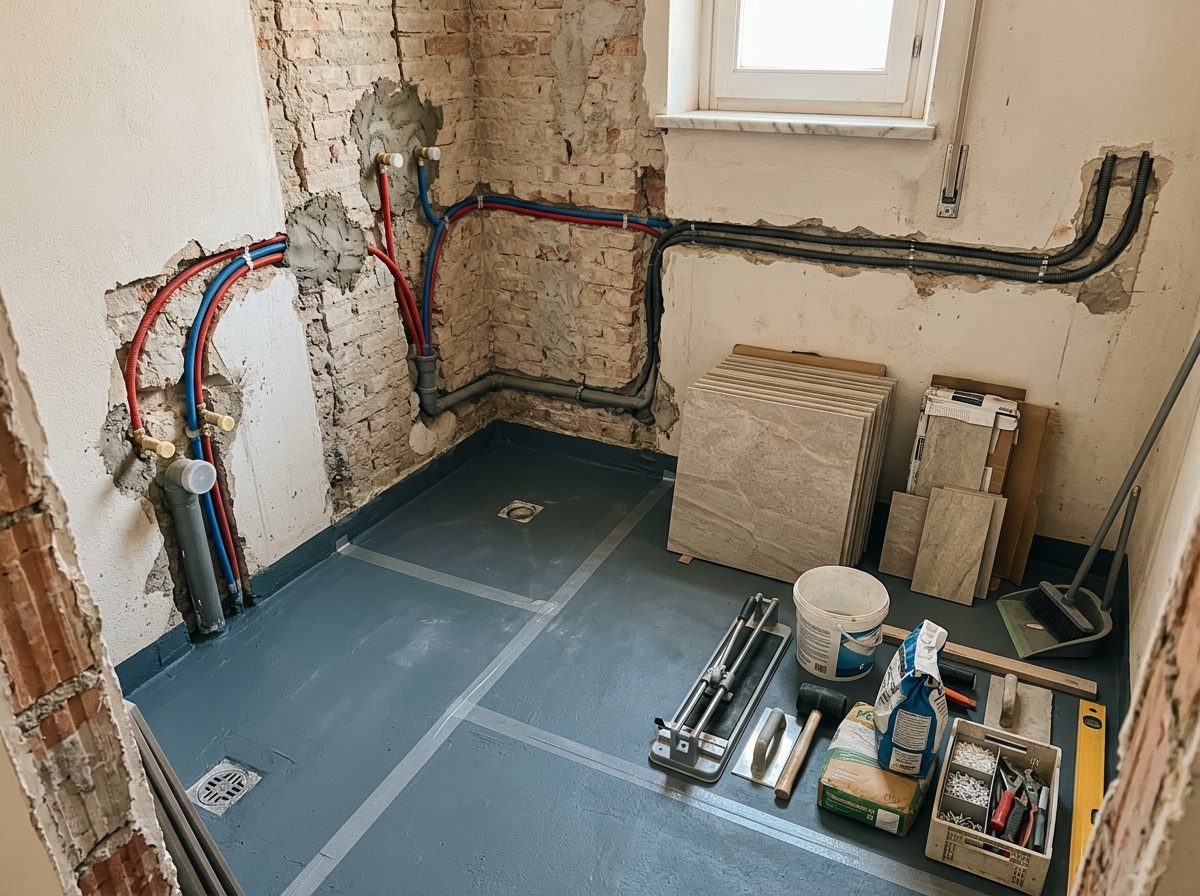
- Works that touch services and masonry together. Here a sequencing mistake is paid for in demolition and rework.
- When building paperwork is needed. Working out whether you need a CILA, a SCIA or a building permit (we cover it in the dedicated guide) and following the process is technical work, not something to improvise.
- When you want to claim the deductions. Traceable payments, correct invoices and a property in order require tidy paperwork: more suppliers mean more documents to check. The overview is in the guide on how to renovate a house in 2026.
- When you don't have time. Following a building site is a second job, and not everyone can afford it.
- When the house is old. Surprises under plaster and floors are common, and you need someone who decides quickly and knows who to call.
The hidden costs of self-managing
These are the ones that don't show up when comparing quotes, which is why they get underestimated.
- Coordination. Someone has to decide the order of the works, notify each tradesperson, receive the materials and check the previous phase was done properly. If it isn't you, you'll have to pay someone to do it.
- Idle time. Good tradespeople have full diaries: weeks can pass between one finishing and the next starting, and meanwhile the house stays a building site.
- Site safety. As the client you have obligations: in general, when more than one contractor works on site (even at different times) the rules require appointing a safety coordinator and checking each contractor's suitability. It's worth clarifying with a professional before starting, because the consequences of an omission fall on you.
- Boundary errors. The plumber drills through the electrician's conduit, the tiler works on a screed that isn't ready: who pays? With separate contracts, the argument is entirely yours.
- Paperwork. Each tradesperson issues their own invoices, and for the deductions every payment must be correct and traceable.
What to demand from a turnkey offer
The opposite risk is relying on a “turnkey” that is just a price. Before signing, check that you have:
- An itemised bill of quantities. Item by item, with quantities and unit prices, not a lump sum. It's the same rule that applies to any quote, as we also explain in the guide to kitchen costs.
- What is included and what isn't. Materials, disposal, paperwork, works supervision, reinstatement.
- How variations are handled. What happens if something emerges during the works (services to redo, deteriorated screeds): who decides and how the cost is communicated to you.
- The expected timeline, in writing. A written estimate is a reference point for both parties.
- Who the technical contact is. A name and surname, not a switchboard.

Warranties: what the law gives you
A point worth making clear, whichever way you work: the law protects whoever commissions works, regardless of what the contract is called. In brief, for guidance only:
- Defects and non-conformities. Whoever carries out the works is liable for them, but there are precise deadlines within which they must be reported after discovery or handover.
- Serious defects. For the more serious defects in a building, liability can last for several years; whether it applies to a renovation depends on the scale and nature of the works.
Terms and conditions vary case by case: if a problem emerges, get advice from a professional or a lawyer straight away, without letting days go by. An additional contractual warranty, longer or broader, can exist, but it's an extra and must be written into the contract. If someone promises it verbally, it counts for nothing.
How to choose: three questions
- How many trades does the job involve? Just one: self-managing is almost always enough. Three or more in sequence: turnkey makes much more sense.
- How much time can you give the site each week? If the answer is “little or none”, self-managing will cost you in delays.
- Is building paperwork or are deductions involved? If so, the job needs a professional: better if they coordinate the rest too.
There's no answer that fits everyone. There's an answer that fits your job, and you find it by looking at what you need to do, not at how much the cheapest quote is.
Frequently asked questions
On paper, usually yes: the price includes coordination and the contractor's margin. In the final cost the gap narrows, or reverses, once self-managing adds up idle time, extras and rework. It depends mostly on how many trades the project involves.
That a single party takes on the whole job and hands it over finished. It isn't a legal term: what's included depends on the quote and the contract, which need to be read carefully.
Those provided by law for works carried out by a contractor: essentially protection against defects and non-conformities of the work, with precise deadlines for reporting them, and longer liability for the most serious defects, where applicable. The details need to be checked case by case with a professional or a lawyer. Any additional warranty must be set out in writing in the contract.
Yes, it's a very common solution: for example, entrusting the main works to a contractor and handling painting or furnishing yourself. It's worth defining in writing where the contractor's work ends and yours begins, to avoid overlapping responsibilities.
Have a question about this article?
Message us on WhatsApp: a surveyor replies directly, no obligation. Or fill in the form.
Want to work out which route suits your project?
With a visit we assess your project together: an itemised bill of quantities and a single technical point of contact from design to keys.
The information provided is current as of October 2026 and is indicative. The legal references are summarised and must be assessed case by case: they do not replace technical or legal advice.